

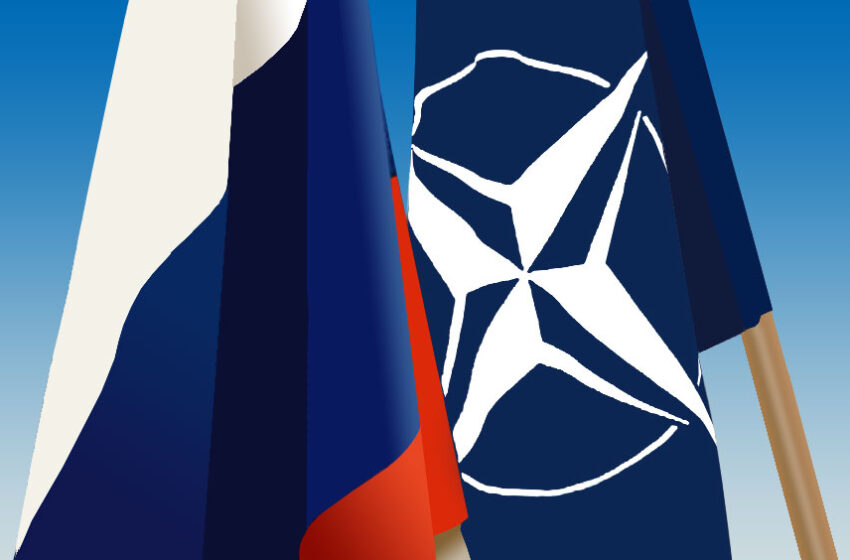
Nato Expansion and the Russian Problem
The motivations that drive the expansion of Nato have been central to American foreign policy since the attacks on 9/11. Prior to this, the establishment of Nato was a direct response to the growing threats of the Soviet Union. However, since its collapse, the security landscape of Europe has shifted. The formation of member states to deter future threats has been clouded by the continuation of aggression techniques more commonly used throughout the 90s and early 2000s.
The question of whether Nato should expand has been debated through two theoretical views. Firstly, Nato should expand broadly, incorporating new states into the institution to reap the privileges of collective defence. Nato’s by-laws, particularly Article 10, indicate that parties by unanimous agreement can invite other European countries to join, on the basis they commit to the collective defence of other members. This would increase membership from the original 27. Secondly, Nato expansion can be explained through ‘deep integration’ in which pre-existing members can gain access to more resources.
As of 2021, Nato recognises three states aspiring to join, including: Bosnia and Herzegovina, Georgia, and Ukraine, it is clear the former of the integration options have been considered. However, multiple questions arise from this: What are the benefits of further expansion? What are the obstacles to this? But most importantly – what does this mean for Russia?
Human nature, according to Liberals, is considered inherently altruistic and rational. Thus, the state, rather defined by borders, are interdependent and a collection of actors working in collaboration. Humans, therefore, play a defining role in striving for peace. Subsequently, Nato as an institution is a primary actor in achieving that goal. This is a common theme throughout discourse surrounding Nato expansion. Incorporating Eastern European states into Nato would provide benefits for the West. By removing Russian linkages, the expansion would therefore remove a Russian sphere of influence and bring security to Eastern Europe. Despite this, some claim that the integrity of Russia’s borders is inviolable. This would prove difficult for Nato in justifying their expansion.
Obstacles to expansion
Political opposition is a leading obstacle to the expansion of Nato into Eastern Europe. The undoing of demilitarisation politics in the East would ultimately create political distaste. The opposition to large government spending as a result of militarisation could create political divides. Finally, the opposition from member states could also be considered an obstacle. Romania’s opposition to Hungary as a result of diplomatic tensions would thus make expansion a long, winding road.
A final consideration of expansion is the harm it does for Nato. The Members of Nato are appointed based on a shared political interest. However, the inclusion of more members could potentially become a struggle for the group as more members continue to join.
The Russian Problem
The fall of the Soviet Union had seen a scramble for power throughout Russia’s presidency. After the unification of Germany and the fall of the red wall, Russia’s interests lay closer to their borders. The 2014 annexation of Crimea, and most recently, their control in the Black Sea both exemplify this. The inclusion of Russia’s neighbour states into Nato would ultimately bring nuclear weapons closer to Russia’s borders. This would affect the ‘buffer zone’, a neutral area of territory where states had agreed to demilitarisation and the West’s compliance to prevent future conflicts. Following this, Russia’s control over the Black Sea would be jeopardised by the integration of Eastern Europe into Nato. This is considered a ‘transportation artery’ for Russia due to its exportation of hydrocarbons, and consequently, Russia would maintain its military assets due to the growing power of the west.
In what is known as the ‘Black Sea chokehold’, evidence of a military buildup as a response to the British presence in the Black Sea highlights Russia’s rejection of Nato expansion. April 15th saw the showcase of 50 aircraft and 20 warships involved in a military exercise, with missiles being fired at British ships, something Whitehall had refused to declare.
Considering the historical context underpinning Nato/Russian cooperation, it could be assumed that an expansion into Eastern Europe threatens to underpin decades of security cooperation between the two groups. The first president of Russia, Boris Yeltsin, was never opposed to the expansion of Nato but had been wary of its significance. Yet, in 2007, President Putin claimed that the expansion has no relation to security in Europe but rather a provocation that reduces the level of mutual trust.
With both the obstacles and benefits of Nato expansion being displayed throughout political discourse, the answer as to whether Nato should expand remains disputed. To the Liberals, the expansion creates unity and stability throughout Europe – aligning with the core aims of Nato. On the realist side, the expansion of Nato is a potential security threat, one predominantly aimed towards Russia. Others claim that Russia’s militarisation of the Black Sea should allow for the expansion of Nato. It is important to consider how an expansion will drive Russia’s view of a hostile West.
Header Image Credit: Flickr
