

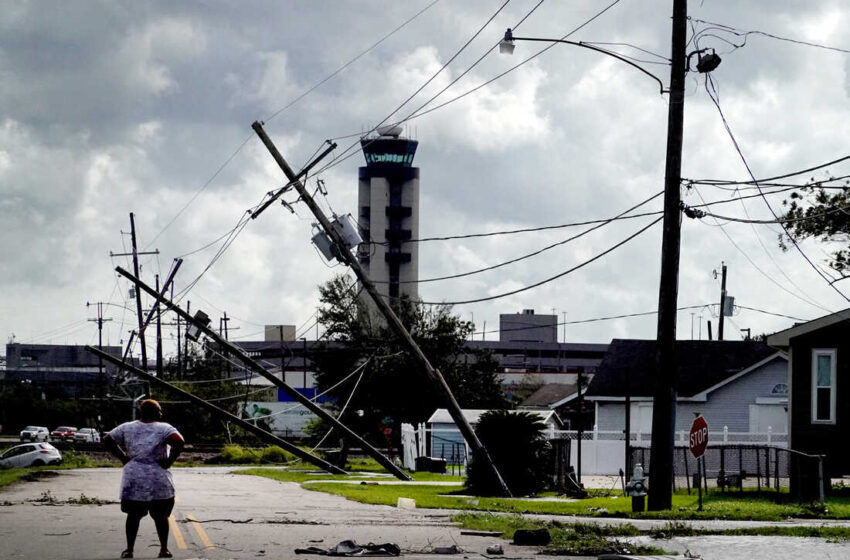
Hurricane Ida hits Louisiana on sixteenth anniversary of Katrina
On August 29th, exactly 16 years after Category 3 Hurricane Katrina caused widespread devastation in the South-Eastern states of the USA, Hurricane Ida made landfall in Louisiana.
Ida is the ninth named storm of the current hurricane season, which spans from June to November. Hurricanes are prone to developing in the Atlantic at this time of year due to warm sea surface temperatures driving the conditions needed for tropical storms to form. Current rising temperature levels in the atmosphere and sea surface only serve to increase the likelihood of a catastrophic hurricane developing. Scientists report it is no coincidence that Hurricane Ida and last year’s Hurricane Laura are tied in second place as the most destructive Hurricane on record after Hurricane Katrina in 2005.
LaToya Cantrell, the Mayor of New Orleans had ordered a mandatory evacuation for residents who live outside the levee flood barrier protection system, but the speed of the approaching hurricane made it impossible to impose a mandatory evacuation for the whole city. Furthermore, many of its inhabitants find evacuation too costly.
President Biden had visited Lake Charles, Louisiana in May, where he promised to improve emergency response facilities following hurricanes. While the National Guard were on stand-by, Mayor Cantrell urged residents to learn from the lessons of Katrina, where emergency responders were delayed by days because of the destruction to transport infrastructure, imploring people to check on their neighbours, friends, and family. “We are first responders, all of us, our neighbours, we’re all first responders,” Cantrell said.
Ida was given hurricane status just before it hit Cuba and intensified over the Gulf of Mexico reaching category 4 on the Saffir–Simpson scale before making landfall in Louisiana, with wind speeds peaking at 150 miles per hour (mph). Category 4 hurricanes see wind speeds between 130–156 mph and catastrophic damage to built-up areas including structural failure and flooding. Power outings across New Orleans left 1.1 million people in blackout and those who found evacuation too pricey reported they were not aware of the government provisions available to them. Two weeks later, 25% of New Orleans remain without power.
While the official death toll is currently 26, the indirect deaths resulting from Ida make this number a significant underestimation, with people having died from carbon monoxide poisoning following the use of power generators and other deaths having been catalysed by extreme heat during the outages.
While the South-Eastern states of the US begin their journey on yet another road to recovery, if the Biden administration wants to see a significant decrease in the human and economic costs of extreme weather events, climate scientists suggest they need to focus not only on emergency responses, but on significant long-term action to lessen the carbon emissions that will continue to accelerate the conditions that cause them.
Photograph: Scott Olson
